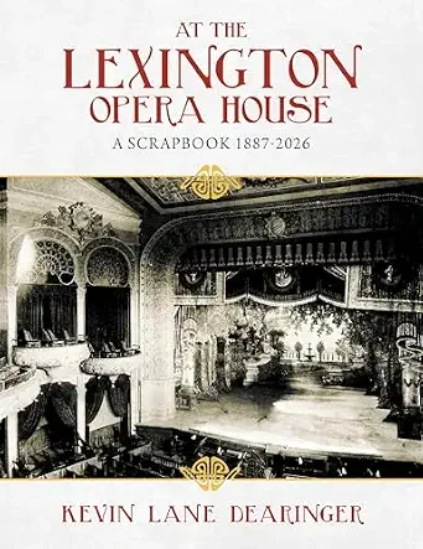
As observed for The Lexington Theatre Company by Kevin Lane Dearinger
Revised and expanded for 2026
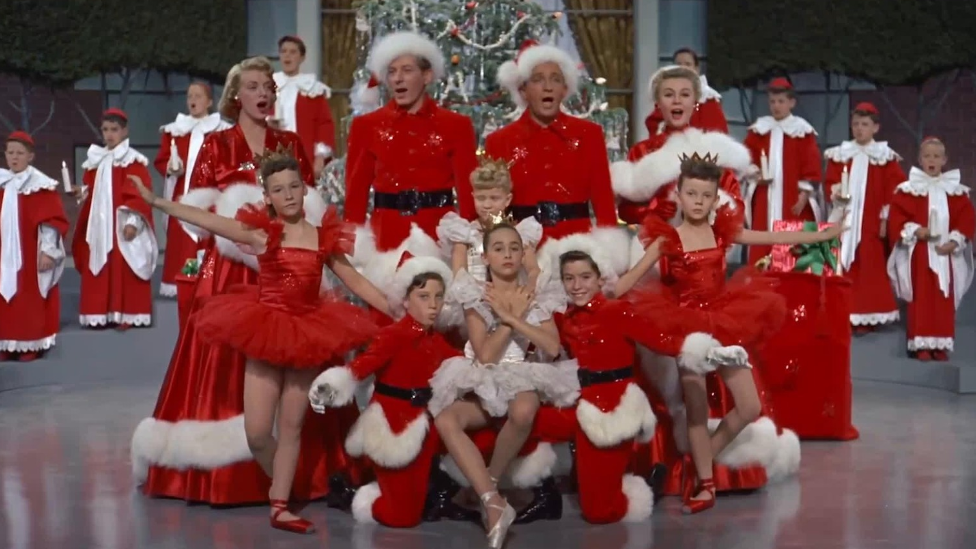
1954: Instant Nostalgia
If you are of a certain age, an age that remembers the time before streaming content, Netflix, DVRs, DVDs, VCRs, Blockbuster Video (“Wow!”), and multiplex movie theatres, you may also remember a time when television viewing was limited to two or three networks, all of which signed off by midnight. Only a few folks had color television, lurid and murky, and most of us watched network programming in black and white. Bonanza. The Wonderful World of Walt Disney. Ed Sullivan. What’s My Line. Father Knows Best. Leave It to Beaver. Gunsmoke.
We all loved Lucy.
And we all looked forward to “Special presentations.” Seasonal treats! Catch them as they happen or not at all! Reasons to stay up after bedtime on a school night.
Magical Mary Martin in Peter Pan.
Soulful Judy Garland in The Wizard of Oz. “And her little dog, too.”
Impossibly-young Julie Andrews and later Lesley Ann Warren in Cinderella.
Anything with Julie Harris on The Hallmark Hall of Fame.
And Hollywood’s White Christmas.
So what if you saw them all in black and white, even after Dorothy landed in Oz! The magic was all there, spinning its own vibrant color out of movie-making genius.
You watched with your family. No one talked.
No one seemed to take an audible breath.
Mary Martin flew. A Wicked Witch melted. And a day-dreaming soprano in awkward footwear danced with a handsome prince. Magic.
White Christmas held its own special joys.
Paramount Studio’s lavish film of 1954, second in ticket sales that year only to Hitchcock’s Rear Window, had been not so much a remake and a rethink of 1942’s Holiday Inn, the film in which Bing Crosby first sang “White Christmas,” sounding the “sleighbells in the snow” with his smoking pipe on tiny silver bells decorating a perfect Hollywood Christmas tree.
Sentimental. Sincere. Unforgettable.
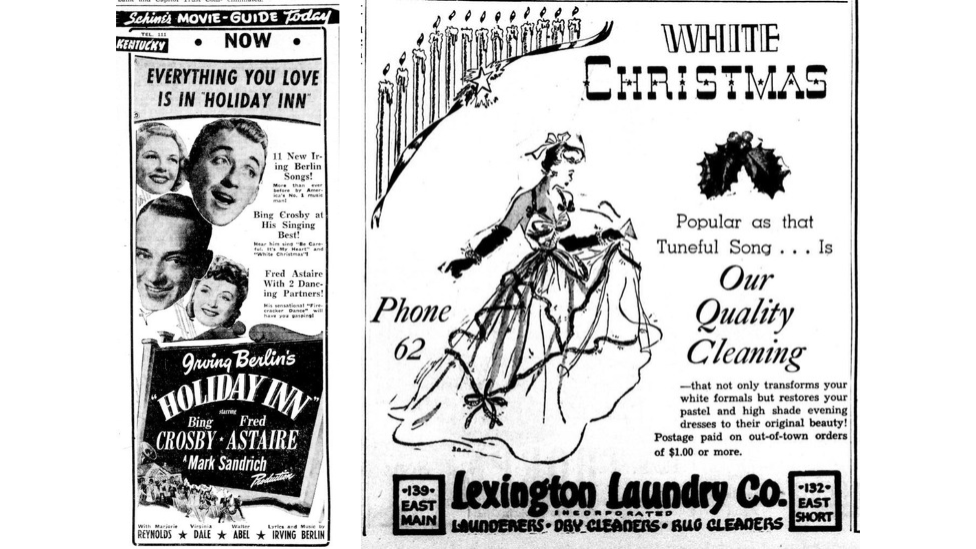
Holiday Inn at the Kentucky Theatre, and local advertising for the holiday season, 1942. (Lexington Herald, October 23, 1942, 9; December 13, 1942. 21.)
The introductory verse to “White Christmas” had originally set up the song as the Christmas Eve musings of a melancholy Californian facing tropical palm trees instead of an atmospheric snowscape. The song, however, quickly became a heart-tugging anthem for anyone homesick during the December holidays. It was a Christmas carol without religious specifics, a one-size-fits-every-heart song, blazingly American and written by the man who had composed “God Bless America.” Poet Robert Frost recognized that Irving Berlin’s song “catches us where we love peace.” If “Nazi theory” insisted “that man in his blood is naturally warlike,” wrote Frost, then “White Christmas” was a “prayer” that we might see “a hundred years” without the blood of “needless deaths and agony on the snow.”
With the family separations of wartime, “White Christmas” spoke personally to every American at home or far-away. Although steadily identified with Bing Crosby, the song was covered by every popular singer who could wrap their vocal cords around its simple melody and lyrics with their open, singer-friendly vowels. It was a best-selling phenomenon and still holds the record for the most recordings sold: fifty million plus.
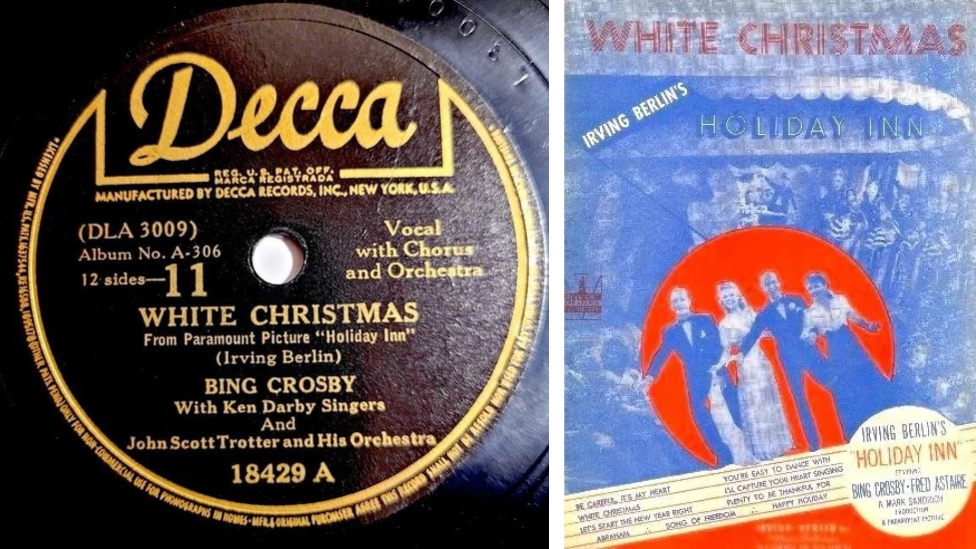
Crosby’s best-selling recording (78rpm) and the sheet music found in every home with a piano in 1942.
And perhaps you, too, have been far away from home in early December, standing in an unfamiliar coffee shop, a department store in a strange town, or a half-deserted airport, when Crosby’s “White Christmas” has been piped in for seasonal ambience.
And, perhaps, you found your eyes more than a little moist.
After the war, Paramount Studios decided it was time to bring “White Christmas” back to the screen, this time as a film title. And to bring back Bing Crosby with it. Originally, he was to reunite with Fred Astaire, his co-star from Holiday Inn, but Astaire injured his back. Donald O’Connor was cast, then fell ill, and the popular comic actor Danny Kaye stepped in and stepped out. As Phil Davis, Kaye provided just the right dose of manic anarchy to set off the easy-going charm of Crosby’s Bob Wallace.
And there would be romance.
One of Hollywood’s finest dancers, Vera Ellen was cast as the effervescent Judy Haynes, and, best of all for the Commonwealth of Kentucky, Maysville-native Rosemary Clooney was cast as Betty Haynes, Judy’s protective big sister and Crosby’s love interest. A popular singer with little acting experience, Clooney became the emotional heart of the film, providing warmth, humor, vulnerability, beauty, and intelligence. And a lovely voice.
Never underestimate a Kentuckian.
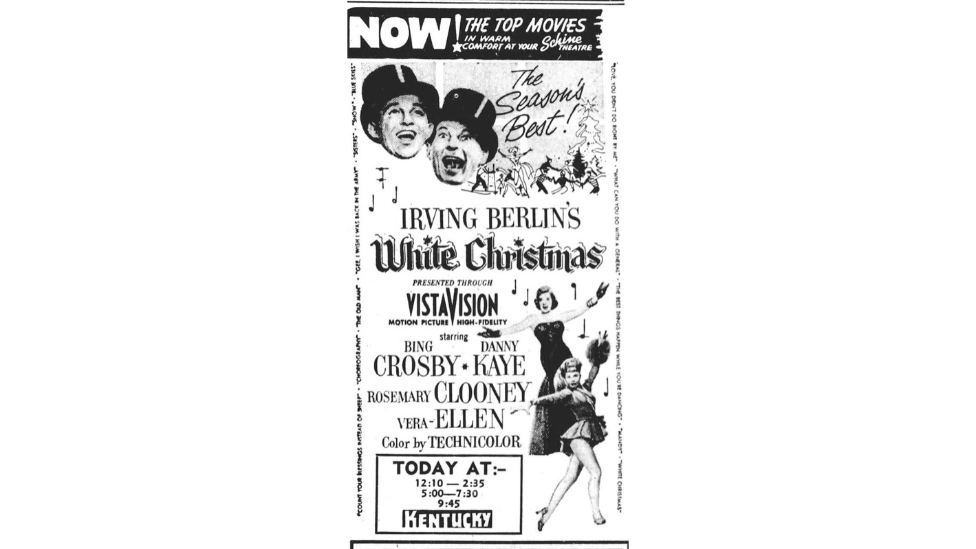
White Christmas at the Kentucky Theatre, 1954. (Lexington Herald, November 5, 1954, 10.)
Mary Wickes offered her usual snap as housekeeper Martha, landing every laugh, and Dean Jagger brought a moving gravitas to the retired general. The tragedies of the recent war were not forgotten in the backstage “show-business” plot.
Prolific as always, Irving Berlin created new tunes and new lyrics.
Irving Berlin! About whom Jerome Kern said, “Berlin has no place in American music. He is American music.”
For White Christmas, Berlin gave us “Snow, “Sisters,” “Love, You Didn’t Do Right by Me,” “The Best Things Happen While You’re Dancing,” and the sublime “Count Your Blessings.” He also opened up his catalog of hits. There were many to choose from.
And, of course, Crosby sang “White Christmas.”
Twice.
Each time with maximum effect on the tear ducts.
The hit movie began its annual television visits in 1964, ten years after its theatrical release. Color televisions were becoming more common, but most of America still curled up in front of those old black and white sets.
And yet the magic worked.
If you are of that “certain age,” you will remember the first time you finally saw White Christmas in full color. Yes, Bing’s eyes are very blue, indeed, and so are those feather fans! Rosemary Clooney is in full American Beauty bloom, especially in that black dress with the diamonds in the back, designed by Edith Head. And those Santa Claus costumes are very, very red!
It’s Christmas, and it had better snow!
Sixty years ago, Hollywood often bought and adapted Broadway musicals (Think and keep on thinking: The Sound of Music!), but rarely did a Hollywood musical find its way to the stage.
That would certainly change.
It wasn’t until the early twenty-first century that Broadway embraced White Christmas. When it did, however, it assembled Broadway’s brightest creative talents to direct, adapt the book, rethink the music, design period costumes and rich lighting, and choreograph for Broadway’s most dazzling magicians: its dancers.
This team brought the film’s now-legendary Americana to the stage with beloved moments intact, dated material rethought, and every heart-beat in place. The stage story is true to the film, but the pace honors live-theatre at its best, with characters to care about and great tunes, one after another. The Irving Berlin estate generously reopened its archives with only a few restrictions: nothing from Annie Get Your Gun, although if you pay attention, Martha can be heard whistling a very familiar tune.
The stage show’s additions to the score are rich! “How Deep is the Ocean.” “Blue Skies,” (Irving Berlin’s gift to his first-born daughter). “I Love a Piano.” “I’ve Got my Love to Keep Me Warm.” “Falling Out of Love” (a sassy number from Miss Liberty, with, uh, cleaned-up lyrics.). As one critic observed, “As each tune starts, you feel the rush of reunion with something long thought unrecoverable.” That “rush” of melodic nostalgia is thrilling.
It’s like visiting an old friend who has discovered the secret of eternal youth.
A friend who just gets better and better over time.
It’s enough to make you search the cold sky for that first perfect snowflake and all the memories it evokes.
Every time.
2026 Bonus: Berlin wrote over 1500 songs, covering a wide range of styles—waltzes, ballads, racy barroom tunes, ragtime, challenge songs, personality numbers, and counter-melody duets—and varied subjects, from “Yiddle on Your Fiddle Play Some Ragtime,” to “When You’re Down in Louisville (Call on Me),” to “Tell All the Folks in Kentucky (I’m Coming Home)” to “The Secret Service (Makes Me Nervous).”
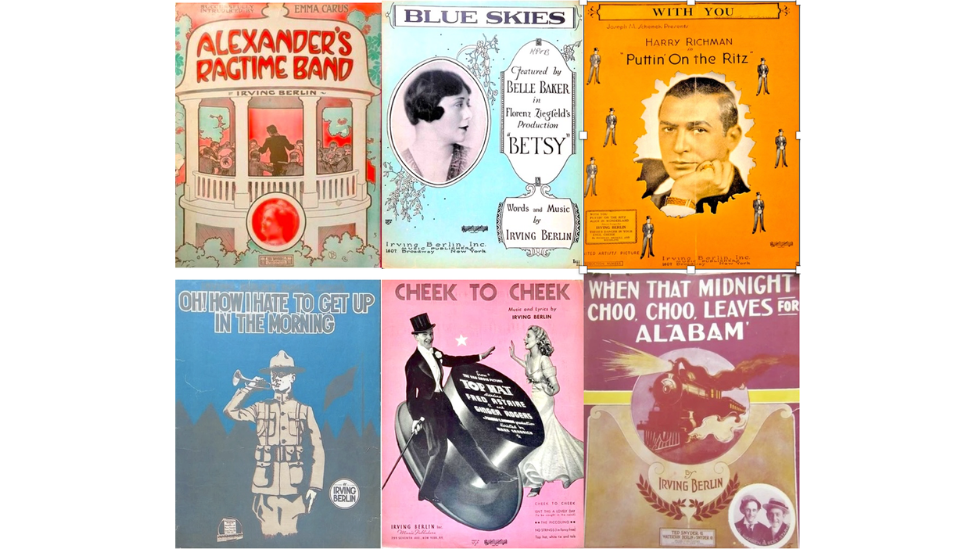
How many of these Irving Berlin hits can you hum?
“Alexander’s Ragtime Band”
“They Say It’s Wonderful”
“What’ll I Do?”
“Cheek to Cheek”
“Easter Parade”
“Doin’ What Comes Natur’lly”
“Heat Wave”
“Let’s Have Another Cup of Coffee”
“Let Yourself Go”
“Top Hat, White Tie and Tails”
“Oh, How I Hate to Get Up in the Morning”
“A Pretty Girl Is Like a Melody”
“Puttin’ on the Ritz”
“Steppin’ Out with my Baby”
“There’s No Business Like Show Business”
Recommended reading: Kaplan, James, Irving Berlin, New York Genius, Yale University Press (Jewish Lives), New Haven, 2019.

The Lexington Theatre Company’s production of Irving Berlin’s White Christmas plays the Lexington Opera House for six performances, November 19-22.

Kevin Lane Dearinger is a retired actor, singer, and teacher. His published works include At the Lexington Opera House: a Scrapbook 1887-2026, four theatre histories, six poetry books, six plays, and two memoirs, Bad Sex in Kentucky and On Stage with Bette Davis: Inside the Fabulous Flop of Miss Moffat. For many years, he sang out to the back row, acted from the bottom of his heart, and danced, as one astute critic put it, “with athletic grace.” In his soul, he still does all three. He counts among his blessings the privilege of sitting in on rehearsals with The Lexington Theatre Company.
Kevin will be signing his books at the 2026 Kentucky Book Festival on November 7.