
“How's That Possible? Well, It's Sure Not Easy!”
Thoughts on the Falsetto Voice in Pop Music in Anticipation of Jersey Boys
As heard by Kevin Lane Dearinger
The human voice is a delicate but powerful musical instrument. It is capable of inspiration, tenderness, and heart-heaving lyricism. There is much to be said for the rich beauty of the bass-baritone and mezzo-soprano sounds, but the sure-fire crowd pleasers are most often the sky-reaching higher voices: the coloratura soprano, the fearless high tenor, the astonishing counter-tenor, the boy soprano, and, especially in pop music, the hair-raising falsetto.
Yes, women can also sing falsetto—and they do—but when a male singer jumps from the traditional “masculine” chest voice into falsetto, the effect can be electric. It sends a transgressive surprise to the emotional corridors of the brain, a sense of panic or pathos or longing.
Brain science aside, it’s just very, very exciting.
The sound always possesses a tightrope-walking element that brings audiences to the edge of their seats and then catapults them up on their feet.
Falsetto made a Sixties sensation of Frankie Valli and the Four Seasons, and it is their unforgettable sound that provides many of the thrills in the musical Jersey Boys, now in rehearsal with The Lexington Theatre Company. Recently, the halls, walls, ceilings, and floors at The Lex’s rehearsal studios have been echoing with musical notes that seem to drop from heaven and then swoop back up again into the ether.
How’s that possible?
A bit of technical talk.
With soprano, alto, tenor, and baritone sounds the vocal cords vibrate in their entirety, but the falsetto is physically selective, produced by vibrating only the thin edges of the cords. Almost everyone can squeak out a falsetto chirp, but to perform consistently in falsetto requires solid vocal health, steady hydration, technical focus, rest, more rest, and a certain amount of bravura.
It isn’t easy.
Well, not for everyone.
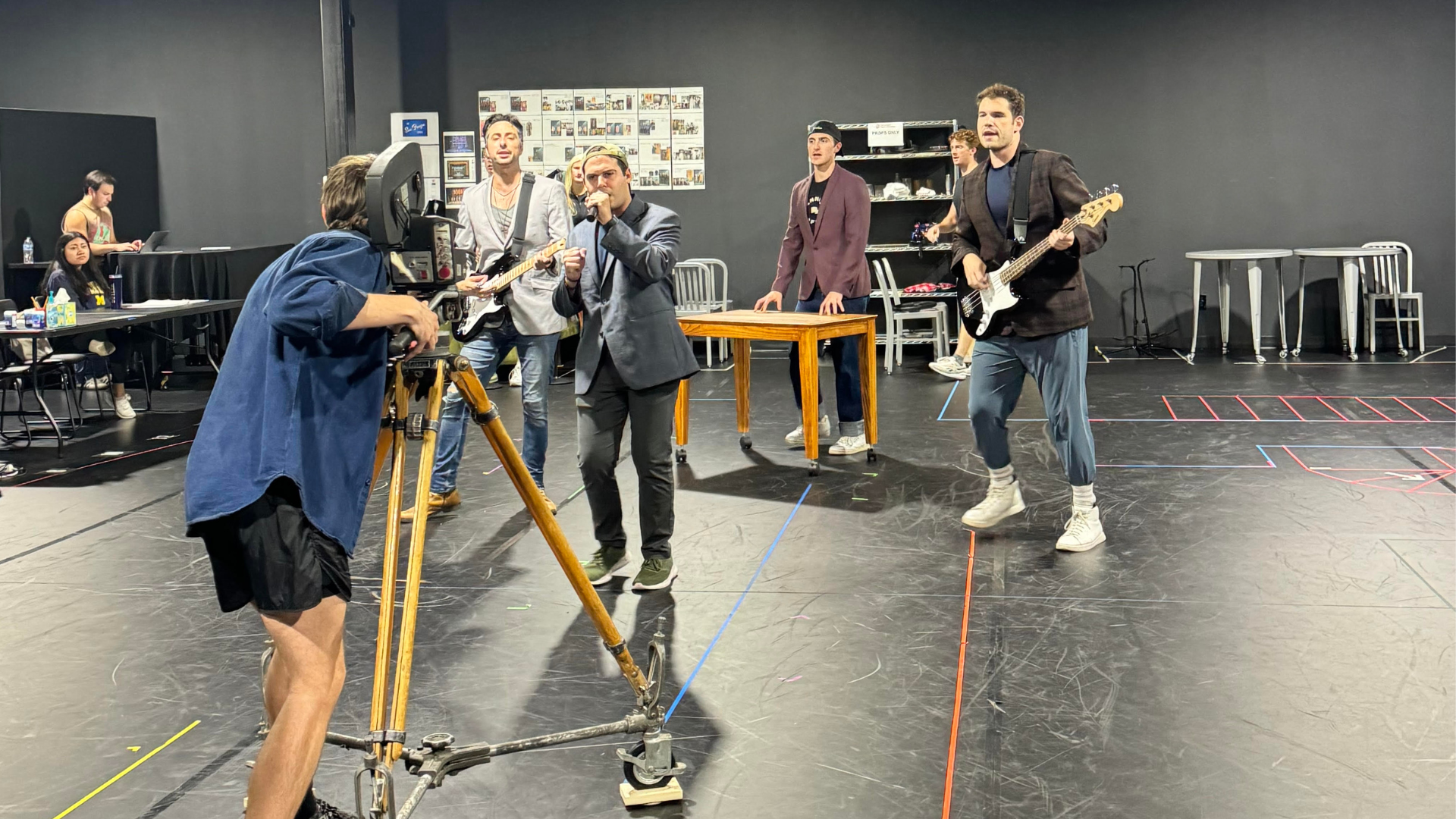
Nick Bernardi, Joey Lavarco, Tyler Okunski, and Caleb Albert in rehearsals for Jersey Boys at The Lex
Joey Lavarco, Frankie Valli at The Lex, modestly recalls listening to the Broadway cast recording of Jersey Boys when he was ten and thinking, “I can do that!” And he certainly could. He also suggests, with a grin, that his vocal placement is closely related to the baby-talk he reserved for his pet dog. Joey knows the value of vocal rest and hydration—currently coconut water. He produces a glorious sound, singing in a strong and true voice that lifts up without any apparent effort into a pure and powerful falsetto.
Some history.
Highly selective.
We will tactfully skip the castrati of earlier days, and jump to the 1930s, when the microphone and the rise of recorded music that could be heard at home on the radio or turntable gave falsetto a popular boost. Close-harmony trios and quartets, male and female, crowded the studios, and fine musicians like the inimitable Ink Spots gained the national spotlight with their signature sound. In recording after recording, Bill Kenny’s relaxed falsetto carried the melody, always in contrast to a talking verse spoken by rumbling baritone Orville Jones, long before Barry White. “If I Didn’t Care” (1939) can still produce goosebumps.
Recorded a decade later, Gene Autry’s “Long Gone Lonesome Blues” made ear-popping use of falsetto in a country-western yodel that might now bring a smile, but the tone of pathos in his performance is impossible to ignore. When he sings that he is “lonesome,” we hear the “lonesome.” That’s the power of falsetto.
One of the best-known falsetto lines in pop music floats over “Lion Sleeps Tonight,” released by the doo-wop quartet The Tokens in 1961, with Mitch Margo on lead vocal. A Gold Record and sleep-away-camp favorite. “Weeheeheehee dee heeheeheehee weeoh aweem away!”
Riding in on the Pacific surf came the Beach Boys, whose irresistible close harmonies were often topped by a falsetto line. Early on, the great musical genius Brian Wilson provided that sound; on the classic “Barbara Ann” (1965), he shares that unforgettable line with Dean Torrence of Jan and Dean. “Ba-ba-ba-ba-Barbara Ann, take my hand.”
At times, falsetto could veer into silliness, as with Tiny Tim’s gender-challenging “Tiptoe Through the Tulips” (1968).
Or, as with Barry Gibb and the Bee Gees, it could define the fashion and attitude of an era. Falsetto sounds fit for the strut of “woman’s man” and for “Stayin’ Alive.” “Ha. Ha. Ha. Ha.”
And so on, through Michael Jackson, the Justins (Timberlake and Bieber), The Weeknd, and many others, right up to Tommy Richman’s “Million Dollar Baby.” (clean version!)
But the always-and-ever-great falsetto voice of pop music remains Frankie Valli with the Four Seasons. So many unforgettable hits, starting with “Sherry (Baby!)”
With Joey Lavarco as Frankie Valli, and phenomenal singing actors Tyler Okunski as Bob Gaudio, Nick Bernardi as Tommy DeVito, Caleb Albert as Nick Massi, with John Leone as Gyp DeCarlo, all leading an extraordinary cast of quadruple-threat actors, The Lexington Theatre Company’s production of Jersey Boys will play the Lexington Opera House for six performances, August 1-4.
With a full-throttle band, directed by Dr. Brock Terry.
Directed and Choreographed by Patrick O’Neill, whose Chicago shook the rafters at The Lex two seasons ago.
Those rafters will be shaking again!
“We’ll Dance the Night Away.”
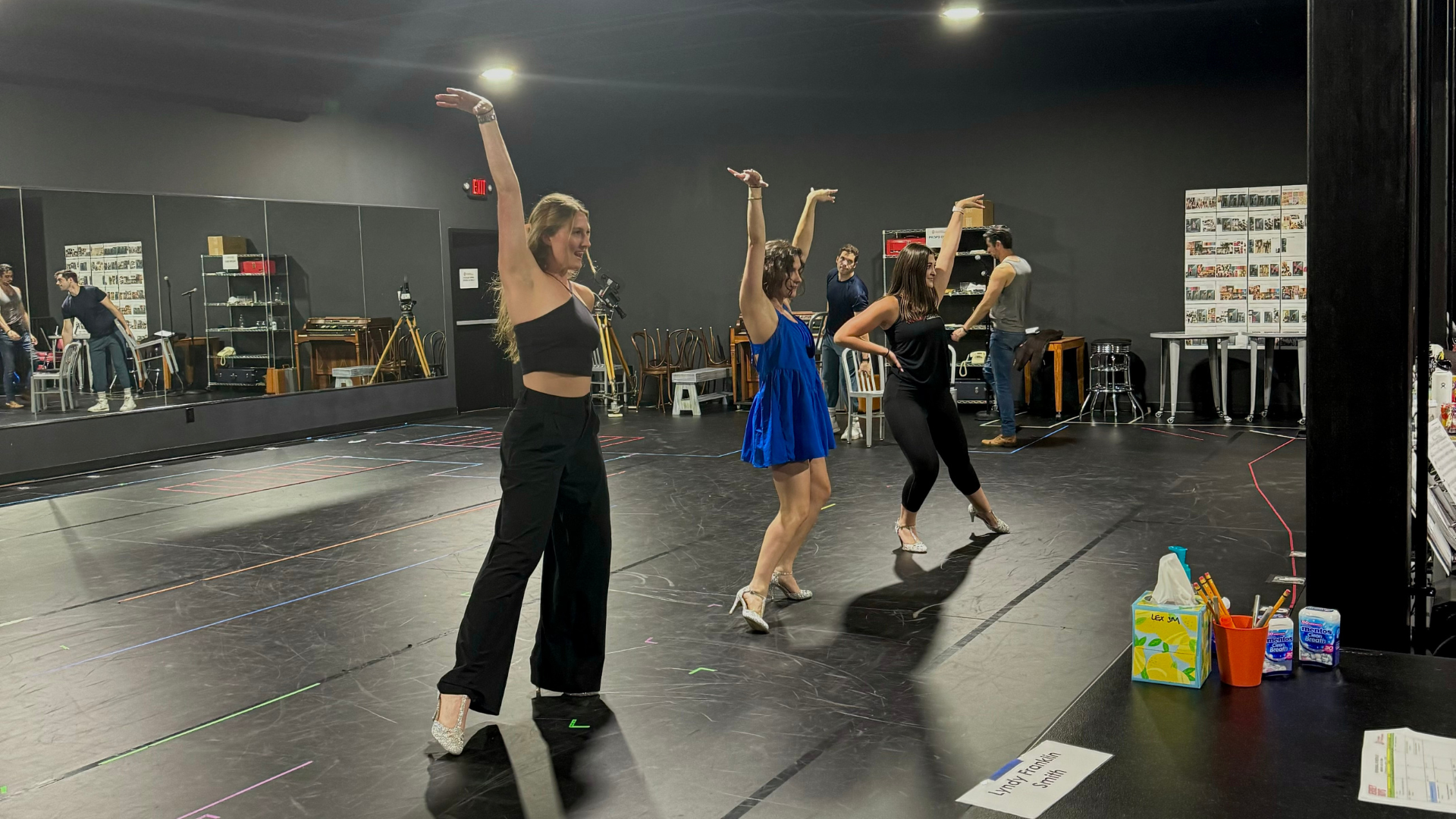
Jacqueline Neeley, Eliza Levy, and Katherine Tabisz in rehearsals for Jersey Boys at The Lex
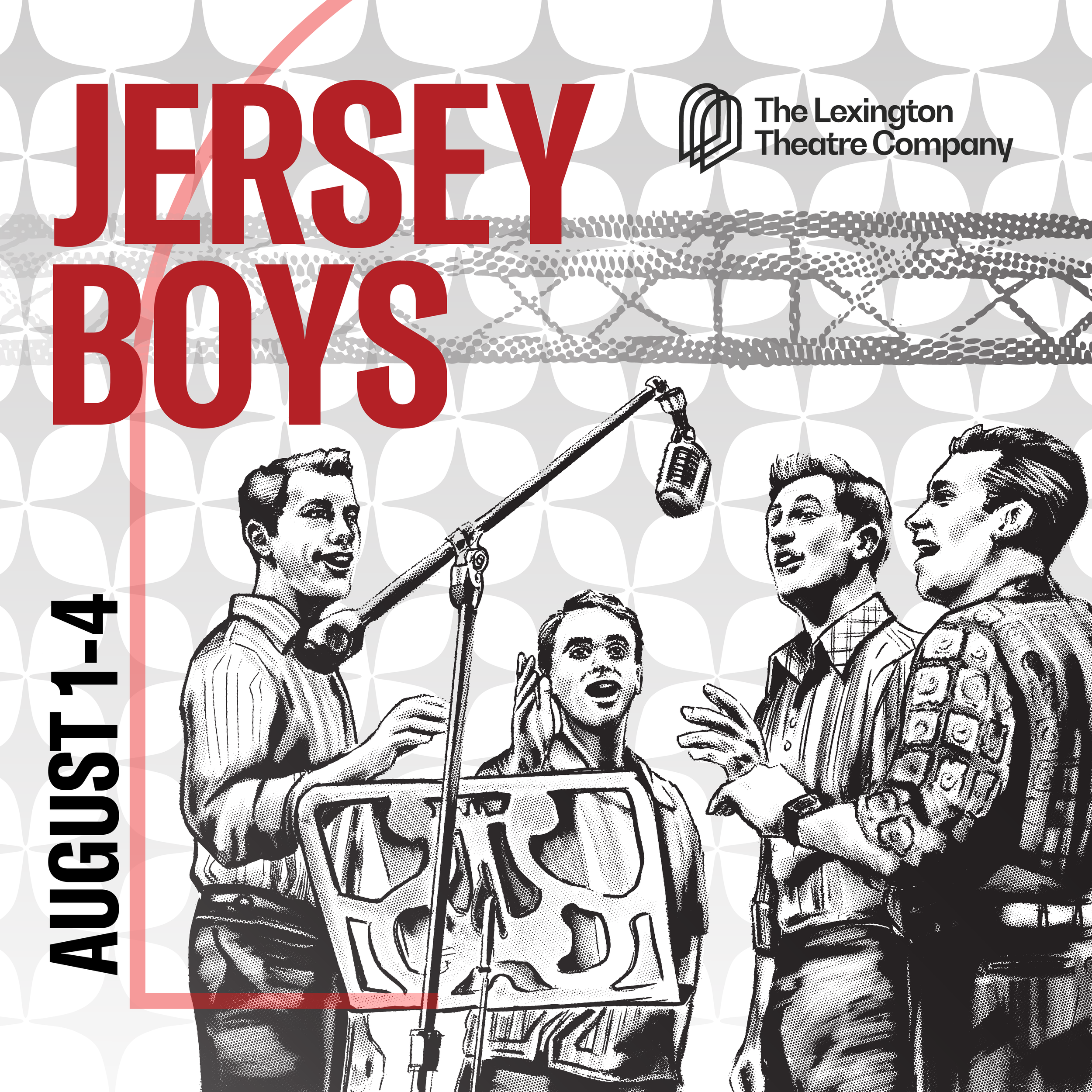
The Lexington Theatre Company’s production of Jersey Boys plays the Lexington Opera House for six performances, August 1-4.

Kevin Lane Dearinger is a retired actor, singer, and teacher. His published works include four theatre histories, six volumes of poetry, six plays, and two memoirs, Bad Sex in Kentucky and On Stage with Bette Davis: Inside the Fabulous Flop of Miss Moffat. For many years, he sang to the back row, acted from the bottom of his heart, and danced, as one astute critic put it, “with athletic grace.” In his soul, he still does all three. He counts among his blessings the privilege of sitting in on rehearsals with The Lexington Theatre Company.
